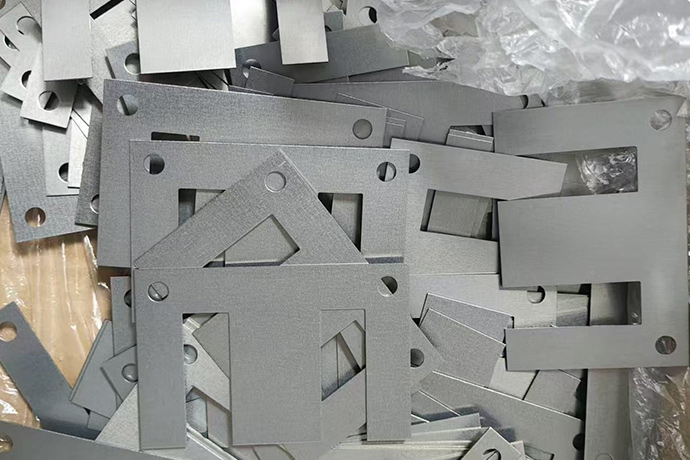
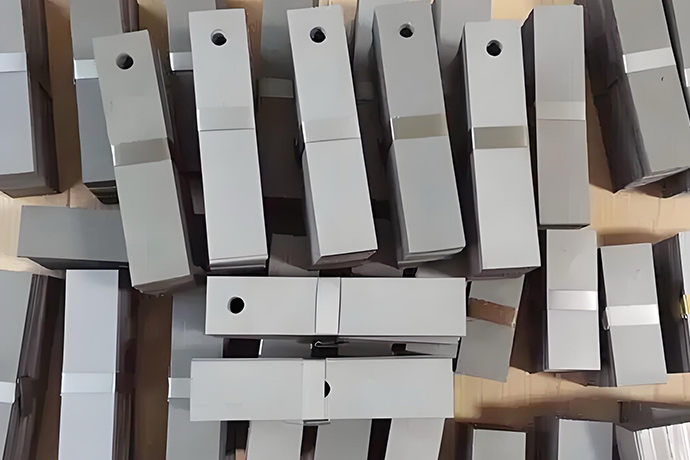
Laminated Transformer Core

Laminated Transformer Core

Material: High-grade laminated silicon steel
Thickness: 0.10 – 0.50 mm precision lamination
Flux Density: High saturation up to 2.03 T
Core Loss: Optimized low-loss performance
Stacking Factor: 0.93 – 0.98 tight stacking
Frequency: 50Hz – 400Hz wide range
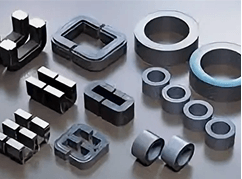
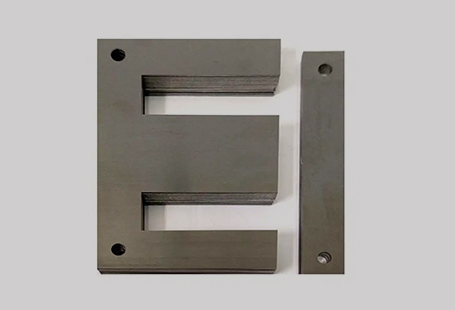
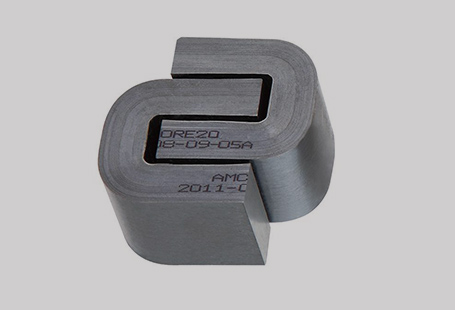
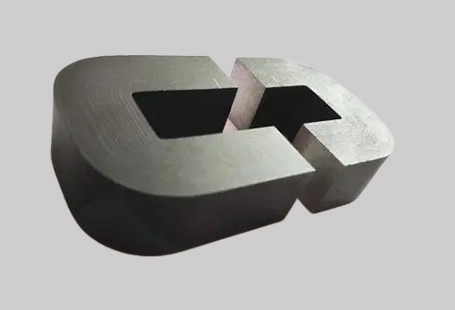
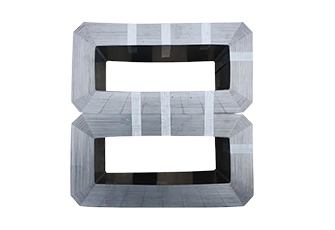
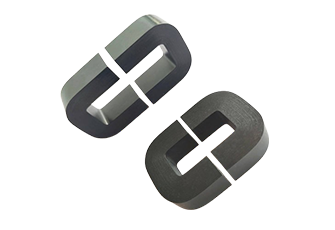
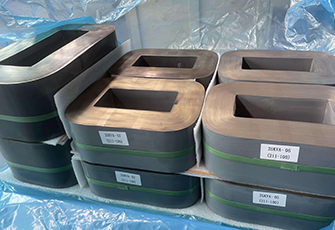
Structure: EI, UI, EE, LL, Toroidal, C-core
Insulation: C5 / C4 / C6 coating available
Annealing: Stress-relief annealed core
Temperature: Class B to Class H (180°C max)
Share:

What Is a Laminated Transformer Core?

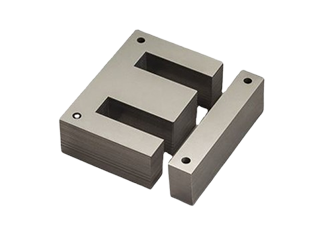
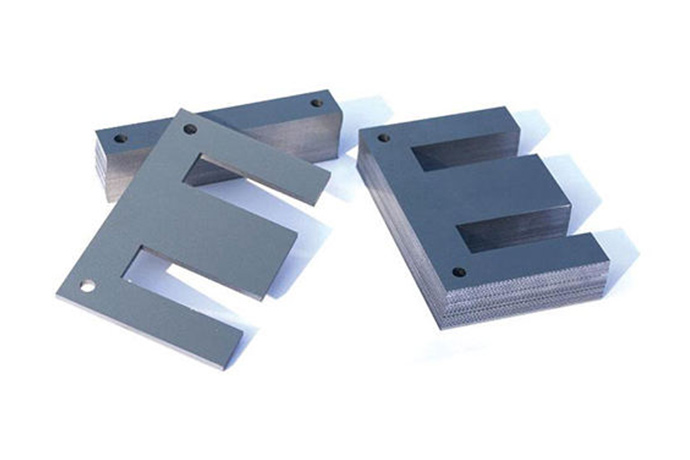
A laminated transformer core is an electrical and magnetic assembly consisting of thinly insulated layers of silicon steel—laminated to produce a low-loss path for an alternating current (AC) magnetic circuit. Each lamination is electrically insulated from every other lamination by means of surface coating or oxide layer which may range in thickness between 0.1 and 0.5 mm. This assembly will contain and control the circulation of eddy currents, which are the principal no-load core loss source in AC.

The power frequency application (50 Hz—400 Hz) relies on the laminated core, which is the state of the art for distribution transformers, industrial control transformers, audio output transformers, and power conditioning. In addition to the advantages over the solid iron core, using a laminated core enables high magnetic permeability with minimal losses and heat buildup.
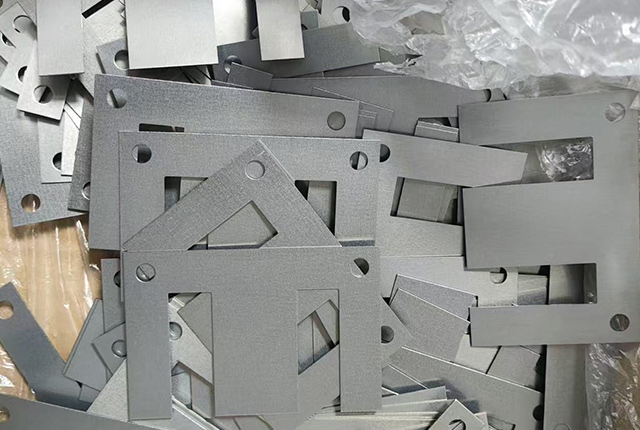
Laminated Transformer Core

How It Works

An alternating magnetic flux through a metallic core generates circulating electrical currents_ that also flow within the core and known as eddy currents. These circulate to generate resistance heating and efficiency loss in the transformer.

Lamination divides the core into a number of very thin electrically-isolated slices. Each slice reduces the cross-section through which eddy current can circulate. The finer the lamination, the smaller the circulating eddy current loop — and consequently the lower the core loss.

Its standard assembly process is as follows:

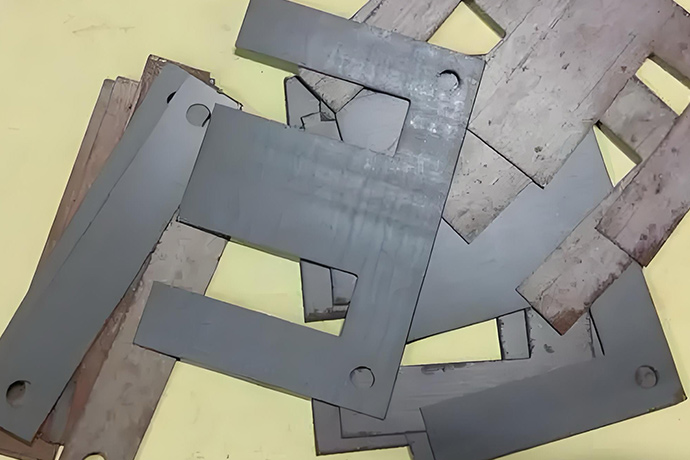
  1. Use stamp or die-cut to process the silicon steel sheet into geometries, like EI, UI, EE, ring etc, which satisfy the design specifications;
  2. Carry out insulating treatment of every stacked figure: general adoption method is inorganic phosphate charring or oxidation treatment, in order to get good effect of electrical isolation between figures;
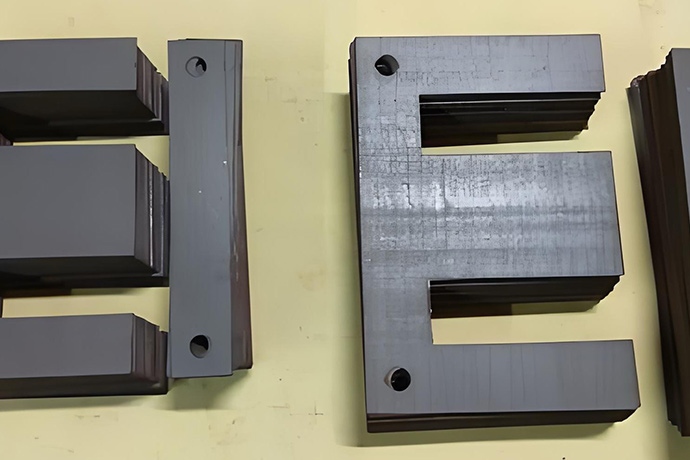
  3. Stack the silicon steel sheets in a perpendicular to the other direction style, so it can ensure the magnetic circuit is covered and the stacking coefficient is approaching the biggest value, thus to make the iron core produce the maximum magnetic saturation;
  4. Clamping, gluing or tying the assemblage stacked pieces so that their core machine remain be steadiness in the condition of load operation to not loosen the magnetic circuit during working period.

State the statement if the steps above are taken after the assembly of the iron core, it can not only efficiently conduct alternating magnetic flux for transformer energy conversion, provide a stable electromagnetic path, but also can effectively block the formation of useless eddy current, minimize eddy current loss, to protect the transformer long-term stable operation.

Key Specifications & Technical Parameters

ParameterValue / Range
Lamination Thickness0.10 mm, 0.20 mm, 0.27 mm, 0.30 mm, 0.35 mm, 0.50 mm
Silicon Content0.5% – 4.5% Si (grain-oriented or non-oriented)
Core Loss (W/kg) at 1.5 T / 50 Hz0.80 – 2.80 W/kg (verify with manufacturer)
Saturation Flux Density1.8 T – 2.03 T (verify with manufacturer)
Stacking Factor0.93 – 0.98
Operating Frequency50 Hz – 400 Hz
Available GeometriesEI, UI, EE, LL, toroidal, cut C-core
Insulation CoatingInorganic (C5), semi-organic (C4), organic (C6)
Annealing TreatmentStress-relief annealing available post-cutting
Maximum Operating Temperature130°C – 180°C (class B to class H insulation)

Parameters marked “verify with manufacturer” are representative industry values and should be confirmed before design finalization.

Core Benefits

Low eddy current loss
Thin lamination grade (0.27-0.35 mm) results in reduction of no load core loss of 30 60% relative to 0.50 mm grades, which, in turn, would directly result in a reduction in the operating temperature of the transformer and therefore economic energy costs.
High magnetic permeability
Grain-oriented silicon steel can reach permeability in excess of 30000H/m in the rolling direction so that smaller core cross section can be used for the same flux density.
Dimensional accuracy and repeatability
Stamped laminations have tight dimensional tolerances (+/-0.02mm) to allow good stacking factors above 0.96 for production transformer batches.
Design flexibility
Available in EI, EE, UI, and toroidal geometries to match single-phase or three-phase winding configurations without tooling customization in most common sizes.
Long service life
Cores taken from annealed laminations are capable of resisting mechanical fatigue and magnetic properties will be sustained for 25 years plus of continuous operation, at the rated flux density.
RoHS-approved material
Standard insulating films and silicon steel alloys conform to the European limits for hazardous substances (No. 76/769/EEC), smoothing the way for OEM export documentation.

RELIABLE QUALITY | BETTER PRICE | FASTER DELIVERY

One-stop transformer core solutions for bulk procurement: quality you can trust, costs you can save, and delivery you can count on.
Contact Us And You’ll Get:
Full Product Range:Comprehensive selection of transformer cores to cover all your industrial and power application needs.
Custom Design Flexibility: Quickly adapt core dimensions, materials, and performance to your exact project specifications.
Cost-Effective Bulk Supply: Factory-direct pricing for large orders, delivering superior value without compromising on quality.
Guaranteed On-Time Delivery: Adequate production capacity and efficient logistics ensure your bulk orders arrive when you need them.
Get Your Customized Quote
Consult Our Experts for Transformer Core Details & Solutions

    Applications & Use Cases

    Laminated transformer cores are the magnetic core for many electrical apparatus working at power frequency.  The low core loss, high saturation flux density and dimensional stability of this type of cores makes them ideal for high volume and specialty custom applications.

    Typical applications include:

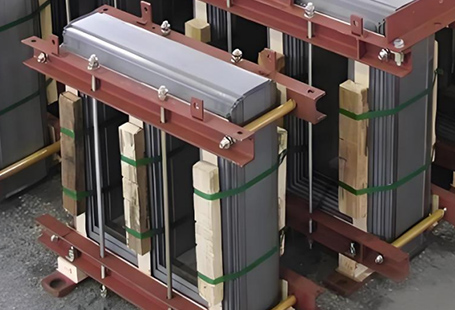
    • Distribution transformers: 10 kVA to 2,500 kVA single and three phase units for use on the electric utility and industrial distribution grids;
    • Industrial control transformers: Machine tool panels, starter panels, PLC power supplies 50/60 Hz
    • Audio output and isolation transformers:High efficiency-permeability EI‘s for low-distortion audio amplification and signal
    • Electric vehicle (EV) on board chargers: Power factor correction stage and (dc/dc) conversion stage that is very space constrained and low losses.
    • Solar inverter and wind power transformers: Grid-scale transformers for renewable energy at extremely high efficiency at partial load
    • Autotransformers and voltage regulators: Tap-changer and voltage regulation devices for sensitive industrial electricity consumers
    • Medical isolation transformers:Safety critical information technology (IT) systems—must use IEC 61558 compliant cores with proven insulation integrity

    Customization Options / Buying Guide

    Choosing a laminated transformer core depends on four parameters that must be met for your application: geometry, material grade, lamination thickness, and surface treatment.

    Geometry choice: EI cores are the best in terms of cost for common single-phase transformers. UI and EE cores are suitable for split-bobbin or push-pull winding arrangements. C-cores and toroidal laminates are used where low stray flux and minimal volume are desired.

    Material grade: Non-oriented silicon steel (such as 50W470, 35W300) are more suitable for applications that require changing flux directions. Grain-oriented grades (such as 30Q130, 27Q120) provide better efficiencies in single phase applications where flux is more uniaxial in nature.

    Lamination thickness: 0.50 mm for 50 Hz distribution transformers where cost is the primary factor. 0.27 – 0.35 mm for low-loss efficiency transformers (classified IE3 or higher). 0.10 – 0.20 mm for higher frequency (200-400 Hz) applications.

    Insulation and annealing: The effects of annealing the cut c-core samples after cutting should be considered as mentioned above to alleviate the magnetic properties deterioration caused by the cutting operation. For humid or corrosive atmosphere,  indicate C5 or C6 inorganic coating.

    Minimum quantity orders and lead times also depend on geometry and material grade–please speak to our sales team for production volume pricing.

    Laminated Core vs. Amorphous Core vs. Ferrite Core

    CriteriaLaminated Silicon Steel CoreAmorphous Metal CoreFerrite Core
    Operating Frequency50 Hz – 400 Hz50 Hz – 1 kHz10 kHz – 3 MHz
    Core Loss (relative)MediumVery LowLow–Medium
    Saturation Flux Density1.8–2.0 T1.56 T0.3–0.5 T
    CostLow–MediumHighLow–Medium
    Mechanical DurabilityExcellentBrittleModerate
    Availability / Lead TimeWide availabilityLimited suppliersWide availability
    Best ForPower frequency transformersUltra-low-loss distribution transformersHigh-frequency switching supplies

    Summary: Laminated silicon steel cores are still the material of choice for conventional power frequency(50/60 Hz) transformer use, where high saturation density, harsh mechanical handling requirements and reasonable manufacturing costs are necessary. Amorphous gives reduced loss, but at 3-5x material costs. Ferrite has no use below 10 kHz.

    Manufacturing & Material Standards

    Laminated cores should be made from cold-rolled silicon steel coil by IEC 60404-8-7 or equivalent national standards (GB/T 2521 China, JIS C 2552 Japan).  The material from mill certic ates to finished core identification should be traceable and show silicon content, coercive force and core loss values in accordance with the grade specified.

    Key manufacturing quality indicators to specify:

    • Stacking factor ≥ 0.96— validated that the quality of lamination surface and burr could be controlled
    • Burr height ≤ 0.05 mm— the gap is tight enough between layers to protect the insulation from breakdown
    • Stress-relief annealing— must for cut cores; desirable (but not must) for all stamped cores intended for precision applications
    • Dimensional tolerance ±0.02 mm—this is necessary for automated winding line.

    Require mill certificates and core loss testing reports with each batch/production run.

    Compliance & Certifications

    • IEC 60404-8-7–International standard for cold-rolled, non-oriented electrical steel. Specifies the metallic and electrical property limits by grade.
    • IEC 61558— Product safety standards for transformers with laminated cores for use in power supply and isolation.
    • GB/T 2521— Chinese national standard for electrical steel;  among the most commonly used standards in Asia-Pacific transformer supply chain.
    • RoHS 2011/65/EU (Recast)— Hazardous substance restriction, standard silicon steel and inorganic material coating material does not require declaration.
    • CE Marking— Whole transformer kit (laminated core included). CE documentation is developed from core supplier papers for CE technical file.
    • ISO 9001:2015–Quality management certification for key manufacturing facilities, provides validation of the process controls for dimensional and magnetic consistency.

    Frequently Asked Questions

    What is the stacking factor of a laminated transformer core? And why is it important?
    The stacking factor can be thought of as the volume of steel in the cross section divided by the total volume of the cross section (e.g. 0.96). The higher the stacking factor, the more magnetic material in the same lump of steel. This affects the effective flux cross section, and thus the size of steel needed for a given inductance. Typical glazed steel cores settle between 0.93-0.98.
    What lamination thickness should I order for a 50 Hz distribution transformer?
    The most common silicon steel lamination thickness for a standard 50 Hz distribution transformer is 0.35 mm or 0.50 mm. Use 0.50 mm if material costs are the dominant concern. Use 0.27-0.35 mm if you are designing to IEC efficiency class IE2 or IE3: by reducing the thickness of the steel gauge you will reduce eddy current losses by 20-40% at 50 Hz.
    How does grain-oriented silicon steel differ from non-oriented?
    Across laminated cores, grain-oriented silicon steel - crystalline structure aligned in one direction in rolling - exhibits substantially lower core loss and greatly increased permeability in the rolling direction. It is specified for single phase transformer cores in which the flux flows in one direction. Non-oriented steel is made with isotropic magnetic properties in all directions and used for three-phase transformer cores and as laminations in rotating machines.
    How does core loss in a laminated transformer core affect efficiency?
    Core loss (hysteresis plus eddy current); will take place at all times each time the transformer is energized (no matter what the load). In the 100 kVA, distribution transformers, the core has a loss between 200 W and 500 W. Making a lower-loss grade specification (e.g. 30Q130 instead of 50W470) can reduce no-load losses by 40% and save hundreds of kWh/year/unit.
    Can laminated transformer cores be customcut to non-standard shapes?
    Laminated cores can be custom-cut to special shape EI, UI, EE, and C-core geometries by custom stamping dies or CNC laser/wire-cutting for prototype and small batch production. The custom cut laminations can also be in torus shapes. Minimums for custom-tooled shapes depend on manufacturer, typically 50-1,000 pieces with standard die tooling.
    What surface coating shall I use on a laminated core?
    Identify the C5 (semi inorganic) or C6 (fully organic) insulation coating to be applied to transformer cores operating in a humid, salty or chemically aggressive environment. They can also be used in humid, salty or chemically aggressive environments where they offer a better resistance to moisture than the conventional semi organic series 4C4 and where they retain an interlaminar insulation resistance in excess of 10 cm2 after long term exposure to 95% humidity.
    sales@jinma-electric.com
    15093344253
    +86 15093344253
    Inquiry Now

      X