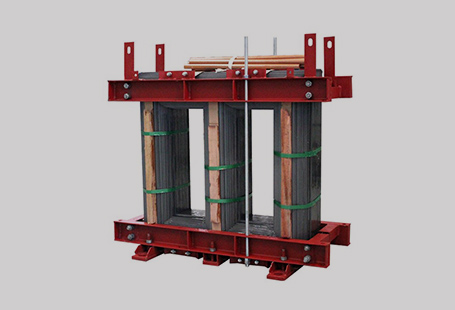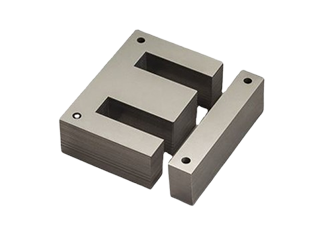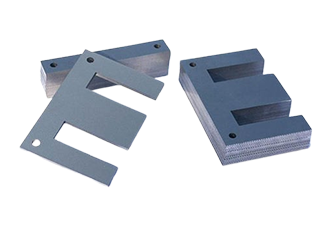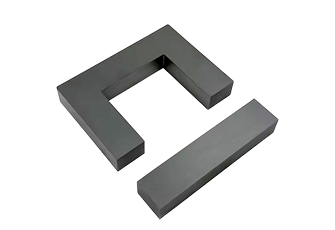
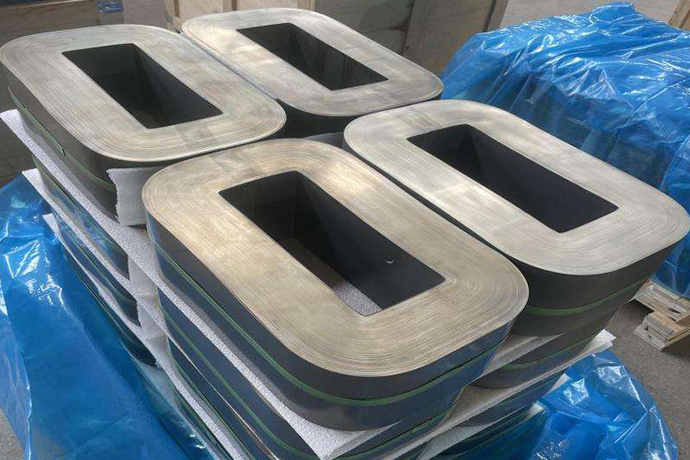
Wound Transformer Core

Wound Transformer Core

Material: M4/M5/M6 grain-oriented silicon steel, amorphous alloy, nanocrystalline
Thickness: 0.10 – 0.35 mm precision wound
Flux Density: High performance up to 1.7 T
Core Loss: Ultra-low loss design
Stacking Factor: ≥97% seamless wound core
Frequency: 50Hz – 200kHz wide range
Size: 20–600 mm OD, custom available
Coating: Epoxy / varnish insulation
Standard: IEC 60076, UL, CE, RoHS
Application: High-efficiency transformer manufacturers
Share:

What Is a Wound Transformer Core?

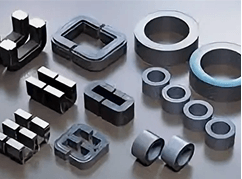
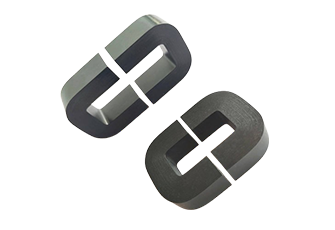
A wound transformer core is a magnetic core made by winding a continuous strip of grain oriented silicon steel, amorphous alloy, or nanocrystalline material into a toroidal (doughnut shape) or C-core shape, and is used in transformers and inductors in a wide range of power electronic applications.

Wound cores avoid the use of punched piece laminated cores, and hence eliminate the air gaps at the butt joints, and also provide a continuous grain structure aligned with the flux, thus greatly diminishing the core loss and magnetising current. Wound cores are commonly used in distribution transformers, SMPS, current transformers, audio transformers, and motor drives where compact size and efficiency are important.
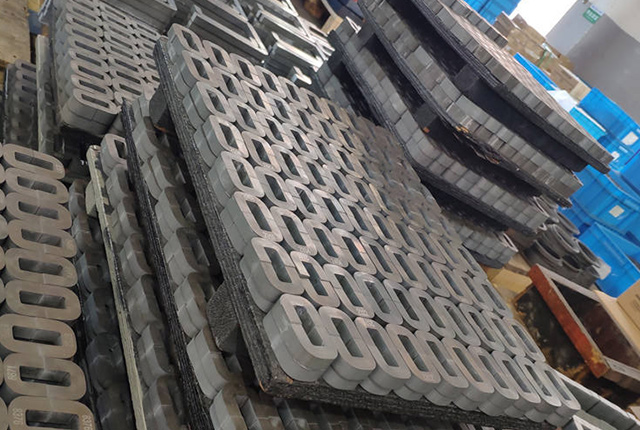
Wound Transformer Core

How Wound Transformer Cores Work

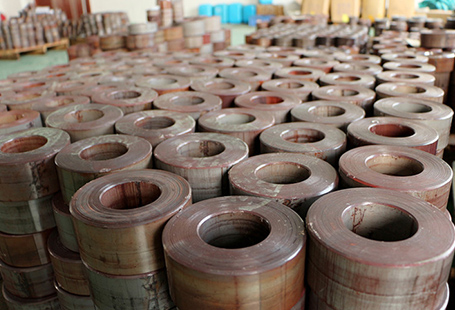
The wound core is produced by tightly winding a constant thickness (0.1 – 0.35mm) strip of soft magnetic metal around a mandrel. The winding tension is controlled so that the domains of the material remain aligned along the easy access.


  1. Strip preparation: Based on the design specifications, all types of magnetic strips are trimmed to the correct width using high-precision equipment for smooth, dimensionally accurate cuts, to prevent burrs interfering with subsequent procedures and to confirm compliance with the core design parameters;
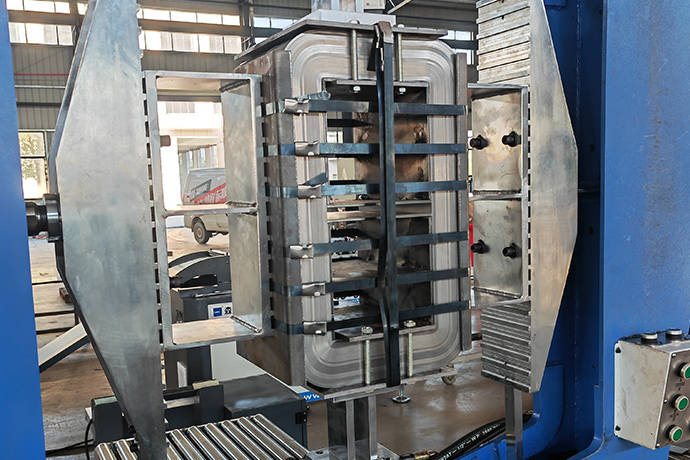
  2. Winding: Insert the pre-treated strips in the special device and wind layer by layer around the dedicated core axis while applying uniform controlled tension to provide a tight fit for the strip and avoid hollow or defects thus creating a ring shape or C-shape core with no mechanical joint;
  3. Annealing:The molded core is placed into a special annealing oven for the stress relief annealing in a controlled atmosphere with carefully designed process parameters to remove the mechanical stress state, recover the magnetic properties and reduce the losses;
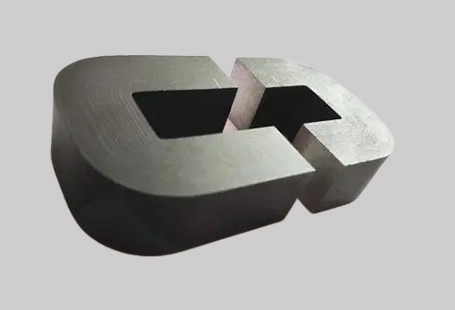
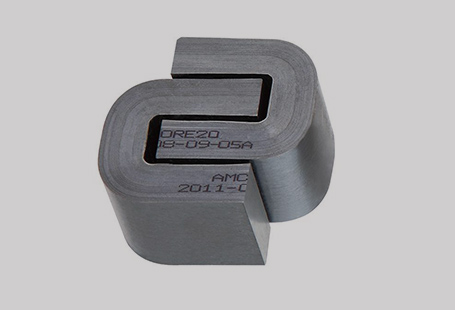
  4. Bonding and cutting: C-typeand UI-type iron cores are gouged to the symmetrical halves by high-precision after annealed, and being ground on contact surfaces, then fixed with special adhesive to make the splicing without gap and mechanical strength up to standard;
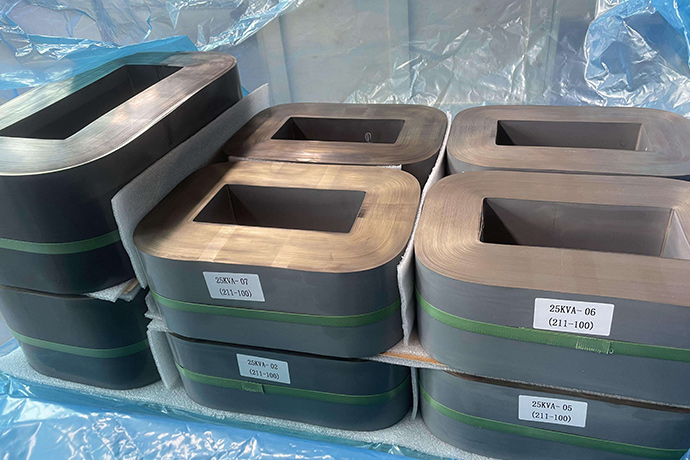
  5. Coating:Spray or dip-coating the molded iron core using temperatures and moisture resistant epoxy resin or varnish and make it at a specified thickness to achieve the effects of rust-prevention, insulate and insulate and reduce the effects of vibration of it.


This results in a core in which flux is conducted wholly in the grain direction thus reducing hysteresis and eddy current losses in comparison to punched laminations.

Key Specifications & Technical Parameters

ParameterValue / Range
Core MaterialGrain-oriented Si-steel (M4, M5, M6), amorphous alloy, nanocrystalline
Strip Thickness0.10 mm – 0.35 mm
Core GeometryToroidal, C-core, UI-core, EI-wound
Maximum Flux Density (Bmax)1.5 T – 1.7 T (Si-steel); 1.2–1.3 T (amorphous) (verify with manufacturer)
Core Loss (W/kg at 50 Hz, 1.5 T)0.8 – 1.1 W/kg (M4 grade) (verify with manufacturer)
Operating Frequency50/60 Hz up to 200 kHz (material dependent)
Operating Temperature Range-40°C to +150°C
OD Range20 mm – 600 mm (toroidal); custom sizes available
Window Factor0.25 – 0.40 typical
Stacking Factor≥ 97% (wound vs. ~95% for laminated)
Surface TreatmentEpoxy coating, varnish, Mylar tape
CertificationsIEC 60076, UL, CE, RoHS compliant (verify per model)

Core Benefits

Low core loss
Grain oriented strip is wound along magnetic flux directionally in the coil, compared with the similar stamped stacked iron core, it can bring 20~30% improvement of specific core loss, reduce the operating temperature rise and overall energy consumption of the transformer, improve the efficiencies of equipment.
High stacking factor (97%)
Stacking coefficient 97%, at the same power requirement, the unit volume can hold more magnetic material, the core crosssectional size can be reduced by up to 15% to realize the compact design of the equipment structure;
No mechanical air gap at butt joints
The air gap at the butt joints of stacked iron cores is completely eliminated by the continuous winding process and the flux edge effect is avoided. As a result, the excitation current is decreased and the audible noise emitted by the equipment working is greatly minimized;
Good dimensional tolerance
The use of automated winding equipment enables the tolerance of outer and inner diameter of the iron core to be precisely maintained at +/ 0.3mm, which considerably eases the design process of the coil skeleton and the later installation process, and enhances the production rate;
Flexible Material Selection
Materials such as M4/M5/M6 grade grain-oriented silicon steel, iron-related amorphous alloy, nanocrystalline alloy can be selected flexibly according to varying different operation frequency, losses budget, and cost control target, to meet the requirements of multi-application scenarios;
Vibration resistance
EPC is formed by epoxy resin bonding process, and it can be compared to the loose structure of laminated iron core with wire wound core of the mechanism integrity of the thermal cycle and vibration environment is better, it can adapt to the complex working conditions with long-term stable operation.

RELIABLE QUALITY | BETTER PRICE | FASTER DELIVERY

One-stop transformer core solutions for bulk procurement: quality you can trust, costs you can save, and delivery you can count on.
Contact Us And You’ll Get:
Full Product Range:Comprehensive selection of transformer cores to cover all your industrial and power application needs.
Custom Design Flexibility: Quickly adapt core dimensions, materials, and performance to your exact project specifications.
Cost-Effective Bulk Supply: Factory-direct pricing for large orders, delivering superior value without compromising on quality.
Guaranteed On-Time Delivery: Adequate production capacity and efficient logistics ensure your bulk orders arrive when you need them.
Get Your Customized Quote
Consult Our Experts for Transformer Core Details & Solutions

    Applications & Use Cases

    Wound transformer cores are called for where low losses, small geometry or operation at high frequency are key considerations. They provide the power conversion for engineers of many disciplines.

    Common applications include:

    • Distribution transformers (50/60 Hz):toroidal winded cores for singlephase polemounted and padmounted units where efficiency standards (e.g. DOE 2016 EU Tier 2) set ultra-low no-load loss targets
    • Switch-mode power supplies (SMPS):amorphous or nanocrystalline C-cores for flyback, forward and LLC resonant converters at frequencies of 20 kHz – 200kHz
    • Current transformers (CTs): precise toroidal cores for revenue metering, protection relays and power quality monitoring
    • Audio transformers:toroidal wound cores for line level and output transformers in pro-audio equipment, where low distortion and wide frequency response are needed
    • Motor drive output inductors:C-cores used in a variable-frequency drives (VFDs) as common- and differential-mode chokes for motor drive output
    • UPS and solar inverter transformers: torroidal wound cores for high efficiency at partial loads,  important for standby and renewables
    • Welding transformers:high flux density wound cores for single phase and three phase arc welding machinery

    Customization Options & Buying Guide

    The correct aspect of a wound transformer core is found by balancing these four parameters: Power Rating, Operating frequency, Loss budget, Physical envelope.

    Material selection guide:

    • Power transformers should be made using grain-oriented silicon steel (M4-M6)50/60 Hz.  The loss is lowest in M4 and it is cheapest in M6.
    • For amorphous alloy(e.g., Metglas 2605SA1) where distribution transformer no-load loss is below 0.1 W/kg,  medium-frequency up to 10 kHz.
    • Use nanocrystalline alloy(weighs less than 1/3 of Iron Powder) for high frequency design (10-200 kHz) low loss at high flux density.

    Geometry options:

    • Toroidal cores— leakage flux is lowest,  good for audio, CT, SMPS;  more work involved with winding
    • C-cores / UI-cores— simple way to wind bobs,  usually used on power transformers and inductors with coils already wound.
    • Cut toroidals (split cores)– permit retrofitting over existing conductors

    Key dimensions to specify:

    Outer diameter (OD), inner diameter (ID), height (HT), strip width, and mean magnetic path length (MPL).  As well as a dimensional drawing or transformer power and frequency specifications for selection support.

    Available upon request: custom gap grinding, epoxy coating, copper foil shielding, banding.

    Wound Transformer Core vs. Stamped Lamination Core

    FeatureWound CoreStamped Lamination Core
    Core loss (W/kg, 50 Hz)0.8 – 1.11.2 – 1.8
    Stacking factor≥ 97%93 – 95%
    Magnetizing currentLowMedium to High
    Mechanical air gapNone (continuous)Present at butt joints
    Audible noiseVery lowLow to moderate
    Winding easeToroid: complex; C-core: easyEasy (bobbin)
    Material utilizationHigh (no scrap)~75–80% (die punching)
    Geometry flexibilityToroid, C-core, UI-coreEI, UI, EE, cut core
    Frequency rangeUp to 200 kHz (material dep.)Typically 50/60 Hz
    Cost at low volumeHigherLower
    Cost at high volumeCompetitiveCompetitive

    Guidance: Wound cores are preferred for applications that require a high level of energy efficiency and/or EMI performance, or where the operating frequency exceeds 400 Hz. For commodity 50/60 Hz transformers where no specific loss goal is set, stamped laminations will typically be the lowest-cost choice.

    Compliance & Certifications

    • IEC 60076 (Power Transformers): The international specification defining electrical, mechanical and thermal performance specifications. Wound cores manufactured to IEC 60076 are ideal for worldwide transformer orders.
    • IEC 60044 / IEC 61869 (Instrument Transformers): Sets accuracy class standards for current/voltage transformer cores. Wound toroidal cores are capable of Class 0.1 through 5P standards.
    • UL Recognition:UL-recognized wound cores verify material and size compliance for end-productUL certification in North America.
    • CE Marking: Applicable to any transformer products being supplied on sale within the European Economic Area (EEA) under the LVD and EMC Directive.
    • RoHS Compliant:The standard wound core materials are compliant with all restricted hazardous substances of EU RoHS Directive 2011/65/EU.
    • REACH Compliant:Coatings and bonding materials comply with REACH SVHC.
    • DOE / EU Tier 2 Efficiency:Wound amorphous cores help meet DOE 2016 (USA) and EU Commission Regulation 548/2014 Tier 2 (Europe) efficiency limits for distribution transformers.

    Frequently Asked Questions

    What is the difference between a toroidal wound core and a C-core?
    A toroidal wound core is simply a torus (ring shape with no cut), whereas a C-core is just a torus wound core that has been accurately cut into two halves shaped like a C. Toroids have less leakage flux and are commonly used for current transformers as well as audio. C-cores are easier to wind as they allow for normal bobbin winding, which allows easier high volume winding for power transformers and inductors.
    What range of frequency is wound transformer cores capable of operating?
    The band of wound transformer cores is 50/60 Hz to 200 kHz (range depending on core material). Wound transformer cores based on grain-oriented silicon steel can be used at 50/60 Hz. Wound transformer cores based on amorphous alloy work at a maximum of 10 kHz. Wound transformer cores based on nanocrystalline alloy operate at 10 kHz to 200 kHz with low losses which makes them perfect for high frequency SMPS and resonant converter designs.
    Are wound core better than laminated core for energy efficiency?
    Generally wound cores will be about 20-30% lower in core loss than equivalent stamped lamination cores at 50/60 Hz. The tape grain oriented strip maintains a continuous magnetic flux path aligned with the easy axis of the material, thus reducing hysteresis and eddy current losses. In designs with a window for DOE or EU Tier 2 efficiency there is almost always a wound amorphous core.
    What box-minimum order quantities (MOQ) do wound transformer cores typically require?
    MOQ is highly dependent on core shape and material grade. Catalog dimensions for standard toroidal and C-core shape silicon steels typically have MOQs between 100-500 pieces. Custom-wound cores with non-catalog outer diameters, strip width, or material grades usually have MOQs between 200-1,000 pieces. Talk to a member of the sales team about volume pricing and low-MOQ prototype programs.
    Is it possible to use wound transformer cores in high humidity / outdoor environment?
    Yes - providing the correct coating specification is specified. Epoxy coated wound cores give sufficient moisture resistance to most indoor environments; if needs to be used outdoors / high humidity. Can specify extra varnish impregnation or conformal coating to the wound core assembly. Operation temperature limits are standard silicon steel cores-40 degreesC to +150 degreesC.
    How do I communicate a custom transformer set-up for a particular winding core?
    Give operating frequency, power rating (VA or kVA), max core loss(W), window area you have, physical envelope (o.d. i.d. ht.) or give the full transformer design spec sheet. The engineering department will then chose the grade of material, strip thickness, dimension of the core and send back a core datasheet in 24 hours.
    What is the delivery time for wound transformer cores?
    Inventory (stock) toroidal & C-cores in silicon steel are generally shipped immediately or within 2-4 weeks. Wound cores (odd size, amorphous alloy or nanocrystalline material) will take 4-8 weeks depending on quantity ordered and availability. Express tooling can be supplied for prototype quantities.
    sales@jinma-electric.com
    15093344253
    +86 15093344253
    Inquiry Now

      X