

What Is a Transformer Core and Why Does It Matter?
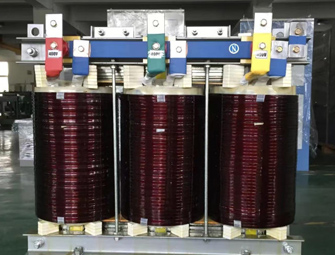
Transformer core is a core component made of high permeability material, the main role is to guide the magnetic flux transfer between the primary and secondary side windings, minimising energy loss.
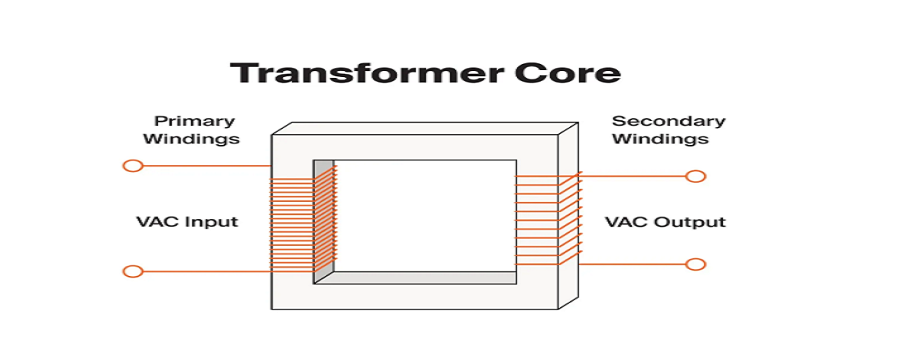
Reducing hysteresis and eddy current losses to improve energy conversion efficiency.
Realising magnetic isolation between windings, reducing electromagnetic interference (EMI).
Stabilise the output voltage and ensure the reliable operation of high and low voltage systems.
It can be said that the core is the ‘heart’ of the transformer, the material selection directly determines the upper limit of the performance of the whole machine.
Types of Transformer Core Materials
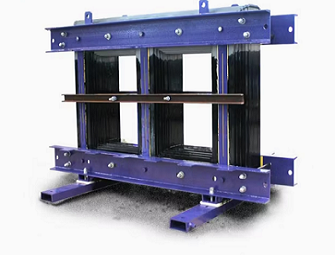
Stacked silicon steel sheet core
Most popular and cost-effective traditional iron core material
Material: Cold rolled oriented / non-oriented silicon steel stacked sheet structure
Advantages: High permeability, low hysteresis loss, high mechanical strength, low cost, stable supply
Applicable: 50/60Hz industrial frequency power transformers, distribution transformers
Limitations: High loss at high frequency, not suitable for switching power supply and other high-frequency scenarios
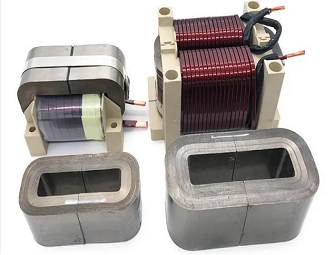
Ferrite Cores
Preferred material for high frequency electronic equipment
Material: Ceramic-like iron oxide, very high resistivity
Advantage: Very low eddy current loss at high frequency, small size, light weight, stable magnetic properties
Application: Switching power supply, converter, high frequency transformer, computer/mobile phone/automotive electronics
Limitations: Higher cost than silicon steel, brittle, not resistant to high-temperature impacts
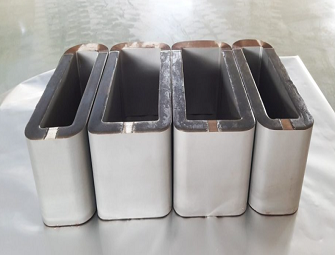
Amorphous Alloy Core
A new generation of materials with ultra-low loss and high energy efficiency
Material: Fast condensing thin metal strip, no crystal structure
Advantage: Core loss is much lower than silicon steel, energy saving effect is outstanding
Application: Energy efficient transformers, power grid distribution, new energy supporting equipment
Limitations: High price, limited availability, more difficult to process
Hollow core
Special high frequency and laboratory scenarios
Material: No solid magnetic conductive material, rely on air magnetic conductivity
Advantages: Wide frequency range, flexible layout, low loss
Suitable for: RF equipment, scientific research and testing instruments
Limitations: Low efficiency, susceptible to external magnetic interference
Key Factors to Consider When Choosing Core Material
Working Frequency
Low frequency (50/60Hz): choose silicon steel sheet, amorphous alloy
High frequency (switching power supply, converter): choose ferrite
Power and Load Requirements
High Power / Heavy Duty: E-I, U-I, Shell Construction
Low Power / Compact: Toroidal, Ferrite Cores
Efficiency Targets
Extremely low loss: Priority amorphous alloys
High frequency high efficiency: Priority ferrite
Economic high efficiency: Priority silicon steel sheet
Size and weight limitations
Space limited, lightweight: toroidal core, ferrite
Standard installation, no miniaturisation required: E-I, U-I conventional construction
Iron core structure matching
Universal scenario, easy to assemble: E-I type
Effective, low noise, compact: Toroidal
Large load, strong magnetic control: Shell type
Medium Power Devices: U-I Type
Cost & Availability
Low cost, easy to source: silicon steel sheet
Medium cost, fluctuates by specification: ferrite
High cost, limited availability: amorphous alloys
Comparing Core Materials
| Material
| Frequency
| Wear and tear level
| bulkiness and weight
| cost
| Typical Scenarios
|
| Silicon Steel
| Medium-low frequency
| Medium
| Large
| Low
| Industrial frequency power distribution, industrial transformers
|
| Ferrite
| High frequency
| Low
| Small and light
| Medium
| Switching power supply, electronic equipment
|
| Amorphous Alloy
| Medium-low frequency
| Very low
| Medium
| High
| Energy-saving transformers, power grid equipment
|
| Hollow
| Wide frequency
| Low
| Flexible
| Medium
| Radio frequency, laboratory instruments
|
Future Trends in Transformer Core Materials
Future iron core technology will be upgraded around the three major directions of high efficiency, green and sustainable:
Popularisation of high-performance materials: Amorphous alloys and nanocrystalline materials will be applied on a large scale.
Soft magnetic composite material breakthrough: Iron-based soft magnetic composite structure to enhance the comprehensive performance
Green manufacturing: Low energy consumption, recyclable and environmentally friendly production processes.
Intelligent customisation: Precise matching of materials and structures by scenario, reducing full life cycle costs
Industry is upgrading from functional to efficient, energy-saving, and environmentally friendly, and iron cores will become an important part of carbon neutral power systems in the future.