

What Does a Transformer Core Do?
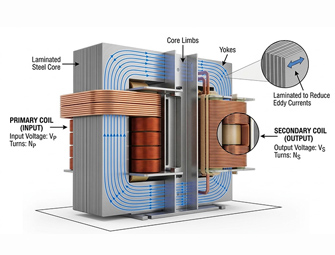
Main function of the transformer core is to guide the magnetic field and provide a low reluctance path for the magnetic flux between the primary and secondary windings for efficient transfer of electrical energy.
Reduce magnetic leakage, avoiding large amounts of wasted energy
Reduce operating losses, control equipment temperature rise
Ensure stable, economic and long-term operation of the transformer
If there is no high-quality iron core, the magnetic field conduction efficiency will be greatly reduced, eddy current losses and hysteresis losses increase dramatically, the transformer is not only higher energy consumption, but also due to overheating to shorten the life of the transformer.
Overview of Shell-Type vs Core-Type Transformer
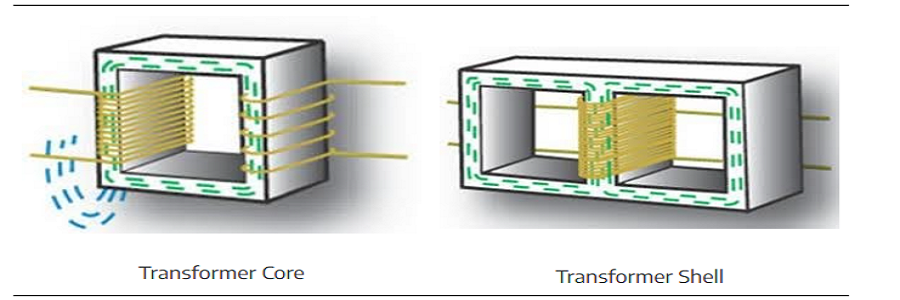
Core-type transformers
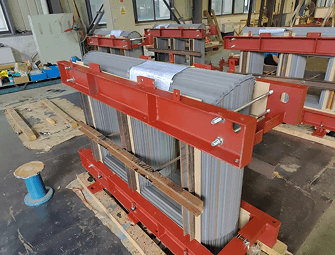
Core-type transformers are the most classic construction, where the windings are directly around the core posts and the core is in the shape of a column or a mouth.
Core provides a low-resistance magnetic circuit to support efficient energy conversion.
Windings are mostly cylindrical or spiral, with mature winding and insulation technology.
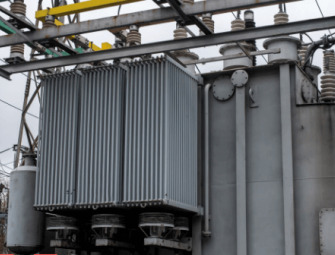
Widely used in large and medium-sized power transformers, high-voltage power transmission and distribution equipment.
Shell-type transformers
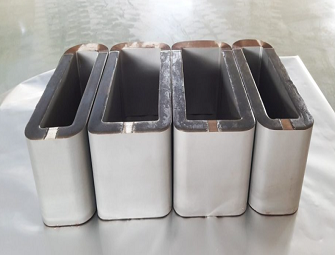
Shell-type transformer adopts the design of iron core wrapped with winding, the iron core is divided into two parts, and the winding is placed in the middle.
Magnetic circuit is more closed, less magnetic leakage, higher mechanical strength.
Strong short-circuit resistance, more stable operation.
Mostly used for special transformers, electric furnace transformers, small and high reliability equipment.
Although the two structures have different designs, the requirements for core materials are highly consistent: high permeability, low loss, good thermal stability, and sufficient mechanical strength.
Preferred Core Materials in Transformers
Stacked silicon steel (cold rolled silicon steel) is the preferred core material for both shell and core construction in the global power transformer industry.
Core Advantages
High magnetic permeability: Silicon element optimises the magnetic properties of steel, smooth flux conduction and improved conversion efficiency.
Low loss: Narrow hysteresis loop, low hysteresis loss, more energy-efficient equipment.
Stacked sheet structure inhibits eddy current: Thin steel sheets are stacked and insulated to greatly reduce eddy current heat generation.
Good processability: Can be stamped, stacked, coiled into rectangular or round shape, suitable for two kinds of structure production.
Controllable cost: Mature technology, high cost performance, suitable for large-scale industrial applications.
Structure characteristics
Iron core is made of multi-layer thin silicon steel sheets stacked together, the insulation between the sheets to block the path of eddy current; the thickness is adjusted according to the frequency and capacity of the transformer, and the frequency scenario is commonly used 0.35mm/0.5mm specifications, taking into account the loss and strength.
Key Factors When Choosing Transformer Core Materials
Magnetic properties: High saturation flux density (reduced volume), high permeability, low coercivity (low losses)
Loss characteristics: Lower the sum of hysteresis and eddy current losses, the higher the energy efficiency
Physical characteristics: Stack thickness, density, thermal conductivity, mechanical strength
Applicability: Temperature stability, aging resistance, frequency adaptability
Winding materials: Preferred copper, high conductivity, low resistance, low loss, surface insulation treatment to prevent short-circuit
Insulation materials: Oil-immersed with mineral oil / synthetic oil; dry with epoxy resin, insulating paper, polymer material
Cooling materials: Aluminium / steel radiator, fan with steel or composite materials to enhance the cooling efficiency
Shell materials: Steel / aluminium alloy box, with anti-corrosion coating, durable, rust and pollution prevention
Benefits of Using the Right Core Material
Improve operation efficiency, reduce long-term electricity costs
Reduce heat generation, slow down the aging of insulation, and prolong the life of the equipment
More stable operation, anti-shock, anti-vibration, adaptable to grid fluctuations
Higher life-cycle cost-effectiveness, reducing maintenance and replacement costs
Future Trends in Transformer Core Materials
Future iron core materials to high-efficiency, energy-saving, green direction upgrade:
Amorphous alloy, nanocrystalline materials gradually applied to high-end energy-saving transformers
Soft magnetic composite materials, new manufacturing process continues to optimise
Higher grades of silicon steel and laser-indented silicon steel further reduce losses
However, in the field of traditional industrial frequency shell-type and core-type transformers, laminated silicon steel will remain the mainstream for a long time, and is the optimal balance between performance and cost.
Preferred material for the core of shell and core transformers is laminated silicon steel. With high permeability, low loss, easy processing and high cost performance, it perfectly matches the magnetic circuit and operational requirements of the two structures, and is the core foundation for ensuring efficient, stable and long-life operation of the transformer.