

What Is a Toroidal Core?
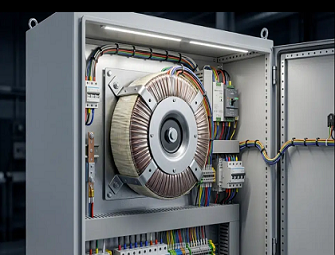
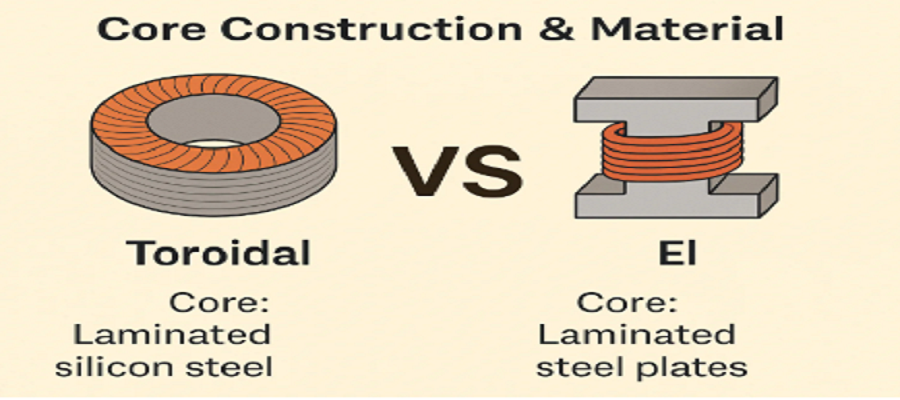
Toroidal Core (Toroidal Core) has a circular shape, similar to a donut, and is made of continuous banded magnetic materials (silicon steel, ferrite, amorphous alloys, etc.) coiled, with no splicing or air gaps in the whole, and the magnetic circuit is completely closed.
Its core features are: continuous magnetic circuit, symmetrical winding, extremely low magnetic leakage, low loss, and outstanding advantages in high-efficiency, low-noise, and miniaturisation scenarios.
What Is an EI Core?
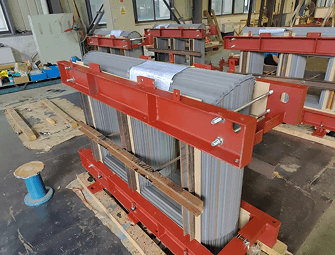
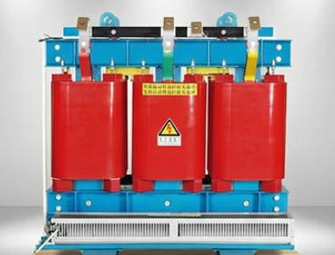
EI core consists of E-shaped + I-shaped two pieces of stamping laminations staggered splicing, simple structure, low cost, is the most commonly used core structure of traditional transformers.
EI cores rely on the combination of E and I sheets to form a closed magnetic circuit, but there is a natural air gap at the splices and gaps between the stacked sheets, resulting in higher losses, leakage, and vibration noise, and are widely used in general power supplies, lighting, and general industrial equipment.
Key Advantages of Toroidal Cores Over EI Cores
Higher conversion efficiency and obvious energy saving effect
Toroidal core adopts a continuous magnetic circuit without breakpoints, and the hysteresis loss and eddy current loss are much lower than that of EI laminated structure.
EI core efficiency: about 90%.
Toroidal core efficiency: stable close to 95%.
Under the same power, the toroidal core has lower loss, which can significantly save power in long-term operation and more easily meet the energy efficiency standards of modern equipment.
Smaller size and lighter weight
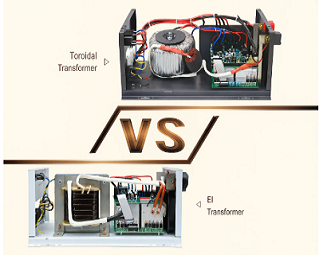
Under the same capacity conditions, the effective cross-sectional area of the toroidal core is more efficiently utilised, eliminating the need for extra laminations and mounting space.
30%-50%smaller than EI cores.
Lighter weight for smaller and more portable designs.
Simpler to install with a single centre bolt as opposed to EI cores, which require multiple points of fixing.
Extremely low magnetic leakage, less electromagnetic interference (EMI)
EI iron core is asymmetrical between the spliced air gap and the winding, with high magnetic leakage and strong electromagnetic radiation, easily interfering with the peripheral precision circuits.
Toroidal core winding is uniformly wrapped around the ring, the magnetic circuit is completely closed, almost no magnetic leakage, better EMC, easily meets the FCC, EN 55011 and other EMC standards, very suitable for medical, audio, and instrumentation equipment.
Quieter operation, almost no noise
EI iron core stacked sheet gap in the alternating magnetic field will vibrateunder the hum, the higher the power the more obvious noise.
Toroidal iron core is tightly wound, no loose gap, magnetic field symmetry, almost silent operation, is ideal for audio equipment, laboratory instruments, medical equipment.
Better heat dissipation for longer reliability and life
Larger surface area/volume ratio of toroidal cores results in more uniform heat dissipation, lower operating temperatures and less thermal stress.
Better voltage regulation
More stable long-term operation
Lower failure rate, prolonging the life of the whole machine.
Disadvantages of Toroidal Cores
Higher cost: Complex manufacturing process, higher material and processing costs than EI cores.
Power limit: limited by the winding process, single capacity is usually within 6000VA.
Difficult to repair: C
losed structure, generally recommended to replace directly after damage, not recommended for repair.
Toroidal vs EI Core: Quick Comparison Table
| Comparison Items | EI Core | Toroidal Cores |
| cost | Low | high |
| Efficiency | Good (Low Frequency) | Excellent |
| Leakage / EMI | Medium | Very Low |
| Weight
| Heavy
| Light |
| Mounting method
| Multi-point fixing
| Centre bolt fixing
|
| Anti DC bias | Strong | Weak |
| Noise
| Noticeable humming
| Almost silent
|
| Repair Difficulty
| Simple
| Complicated
|
EI core wins in low cost, easy maintenance, high power friendly; toroidal core wins in high efficiency, small size, low leakage and low noise.
Real-World Application Examples
Toroidal cores are suitable for equipment with high requirements for performance, size, noise, and EMI:
Medical equipment (MRI, ultrasound, monitors)
High-end audio, amplifier
Precision instruments, sensors
Communication power supply, server power supply
Photovoltaic, new energy, electric vehicle electronics
Industrial control, security equipment
Lighting, induction heating, welding equipment