

What Is a Transformer Core?
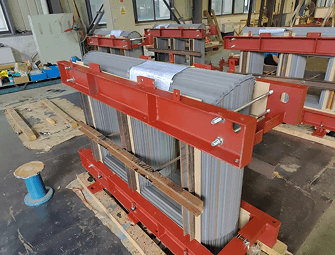
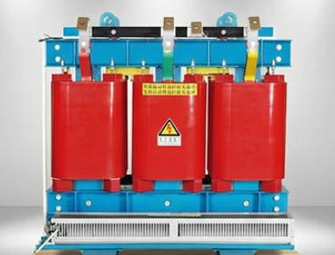
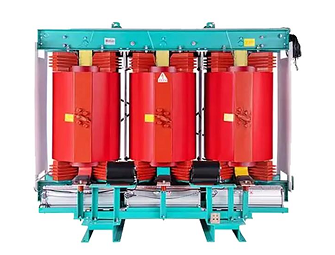
Transformer core is assembled inside the transformer windings, processed and shaped by various types of ferromagnetic materials, the core magnetic structure, is the transformer to build a closed magnetic circuit, electromagnetic induction and high efficiency power conversion of the key carrier. Relying on the excellent low reluctance characteristics, the iron core can effectively gather and channel the alternating magnetic flux generated by the primary winding, significantly reduce the leakage loss, strengthen the electromagnetic coupling effect of the primary and secondary windings, so that the voltage up and down the voltage transformation stable landing, is the core of the core structure can not be replaced by the core functional components.
What Is the Purpose of a Transformer Core?
Concentration of alternating flux
This is the most basic core function of the iron core. When the coil is energized with alternating current to generate an alternating magnetic field, the air magnetic circuit will generate a large amount of magnetic leakage, resulting in wasted power and electromagnetic interference. The iron core builds a closed magnetic circuit by virtue of its high permeability property, which guides most of the magnetic flux along the core, greatly reducing the proportion of leakage magnetism and realizing efficient electromagnetic coupling between windings. Data show that with iron core transformer flux utilization rate of up to 85% ~ 98%, while the empty core transformer flux utilization rate of less than 10%, energy efficiency gap is extremely significant.
Reducing no-load losses
Transformer loss is divided into copper loss and iron loss, iron loss completely from the iron core, including hysteresis loss and eddy current loss. When there is no iron core constraint, the excitation current of the equipment soars, and the no-load energy consumption remains high. High-quality iron core materials with low hysteresis coefficient and high resistivity can effectively suppress heat loss during repeated magnetisation and demagnetisation. Especially long-term grid standby distribution transformer, iron core loss directly affects the overall line loss of the grid, the current stage of energy-saving transformation of the grid, commonly used amorphous iron core, high grade silicon steel core instead of the traditional iron core, so as to achieve the whole network to reduce consumption and increase efficiency.
Reduction of excitation current
Excitation current is the base current to maintain the rated magnetic flux of the iron core, and the higher the magnetic permeability of the iron core, the smaller the required excitation current. Excessive excitation current will increase the reactive power loss of the power grid, cause current waveform distortion, and pollute the power supply system. High permeability iron core can control the excitation current within a very small proportion of the rated input current, effectively improve the power factor, reduce the input of reactive power compensation equipment, in the industrial transformer cluster application scenarios, the power saving effect is very considerable.
Stabilising voltage transformation
Turns ratio of the transformer determines the voltage transformation ratio, but the theory is based on the premise of sufficient mutual magnetic flux. A large amount of magnetic flux leakage will lead to a serious drop in output voltage, unable to meet the requirements of the rated operating conditions. By gathering the magnetic flux, the iron core makes the positive relationship between the number of turns and the voltage fall into place accurately, which is suitable for various scenarios such as industrial frequency power distribution and high frequency switching power supply, and realises the diversified needs of power conversion such as high-voltage step-down and low-voltage step-up.
In addition, the moulded iron core can be used as the coil skeleton, fixing the position of the winding, avoiding problems such as loose winding, displacement, short circuit, etc., improving the overall mechanical stability of the transformer and reducing the vibration failure rate of the equipment.
How Transformer Cores Are Constructed?
According to the difference in equipment frequency and power, the industry has formed three major mature core molding processes: stacked riveting, strip winding molding, powder metallurgy sintering, corresponding to the silicon steel stacked iron core, toroidal iron core, ferrite core, and various types of processes to adapt to the scenario and the processing characteristics of the significant differences.
Stacked iron core processing technology
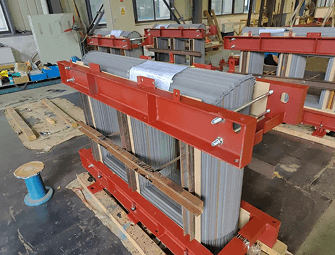
Stacked iron core is the mainstream structure of industrial frequency transformer, by 0.23mm ~ 0.35mm insulation silicon steel sheet interlaced stacked into a mature process, low mass production costs, widely used in 50/60Hz low frequency equipment, the core processing flow is divided into six processes:
Substrate insulation pretreatment: Selection of orientation or non-orientation of silicon steel coil, the surface of the insulation varnish or high temperature oxidation to form an insulating layer, isolate the monolithic conductive circuit, inhibit eddy current losses. High-power power distribution equipment with 0.35mm silicon steel, precision small frequency transformers prefer 0.23mm ultra-thin silicon steel, thin material loss is lower but higher processing costs.
Cutting stamping molding: Through stamping or laser cutting, the silicon steel processing for E, I, U, L-type standard monolithic, of which the EI piece of the most widely used, UI piece suitable for high-power industrial equipment. High-speed stamping is used for mass production, and laser cutting is used for small-lot customization. After processing, edge burrs need to be polished to avoid piercing the insulating layer and triggering short circuits between chips.
Staggered stacked inserts:Use of layered staggered inserts, staggered adjacent stacked seams, eliminating large air gaps, reducing magnetic resistance and excitation current, precision transformer stacking gap can be controlled within 0.02mm. At the same time accurate control of stack thickness, to protect the core effective cross-sectional area, to avoid the flux saturation problem.
Tighten the bundle fixed: Through the strap, bolt, insulation buckle clamping iron core, offset silicon steel magnetostriction brought about by the vibration noise. The clamping strength needs to be precisely controlled, too loose is prone to vibration and rattling, too tight will destroy the grain structure of silicon steel and increase loss.
External insulation wrapping: Core surface wrapping insulating tape, aramid insulating paper, isolate the core and winding copper wire, to prevent insulation damage caused by short circuit, large oil-immersed transformers need additional insulation pads to strengthen the protection.
Assembly dipping paint curing: Using the first winding after inserting core or first core after winding two assembly methods, after completion of the vacuum dipping paint drying, soak through the gaps, curing structure, to achieve vibration and noise reduction, moisture corrosion, strengthen the insulation of the multiple effects. The core advantage of the laminated structure is the split insulation, which can effectively divide the eddy current circuit, and is the optimal structural solution for industrial frequency scenarios.
Toroidal core winding and molding process
Toroidal iron core is a seamless circular structure, formed by silicon steel, amorphous thin strip winding with constant force, no splicing air gap in the magnetic circuit, extremely low magnetic leakage, very low noise, mostly used in high-quality scenarios such as precision power supplies, medical equipment, audio amplifiers, etc. The processing procedure is divided into four steps:
Strip sl itting: Cut the coil material into narrow strips of the appropriate core cross-section width to ensure that the cut surface is flat and burr-free, laying the foundation for tight winding.
Constant tension winding: Constant tension winding on the ring mold to ensure that the layers are tightly adhered to each other, too loose tension is easy to produce gaps, too tight will destroy the material crystal structure, deterioration of magnetic properties.
High-temperature stress relief annealing: Winding molding will generate mechanical stress, increasing hysteresis loss, high-temperature annealing in an inert gas-protected furnace is required to eliminate internal stress, but also the raw material original magnetic properties, amorphous iron core annealing temperature control precision requirements are extremely high.
Insulation encapsulation winding: After annealing and cooling, covered with epoxy resin, glass fiber tape insulation, and then through a special winding machine winding enameled wire, ultra-high-power toroidal core winding is difficult and costly.
Ferrite core powder metallurgy sintering process
Ferrite is a ceramic magnetic material, suitable for kHz~MHz high frequency scenario, relying on powder metallurgy molding and sintering, is the core of switching power supply, consumer electronics high frequency transformer, the production process is fine and standardized:
Raw material proportioning and mixing: Iron oxide as the base material, with manganese zinc, nickel zinc and other metal oxides, accurate proportioning, manganese zinc ferrite is suitable for medium and high frequency, nickel zinc ferrite is suitable for ultra-high-frequency radio frequency scenarios.
Pre-firing and ultra-fine grinding: Mixed powder is pre-fired at high temperature to complete the solid-phase reaction, and then ultra-fine grinding, the fineness of the powder directly determines the density and permeability performance of the core after sintering.
Spray granulation: Grinding powder is added with binder and spray dried to make fluid granules, suitable for automated stamping production.
Precision press molding: Granules are filled into standard molds such as EE, PQ, RM, ETD, etc. and pressed into core blanks under high pressure.
High-temperature sintering and curing: High-temperature sintering and molding at around 1200°C. The sintering temperature and temperature change rate are the core quality control points, and abnormal temperature control will easily lead to core cracking and parameter drift.
Controllable Air Gap Processing: For energy storage and inductor equipment with DC bias, a small precision air gap is reserved for half-core grinding to effectively avoid DC magnetization saturation of the iron core.
In addition to the three mainstream processes, nanocrystalline iron core relying on amorphous billet microcrystallization heat treatment molding, powder cores made of iron powder mixed with insulating rubber pressing, process flexibility to adapt to various types of special working conditions.
Main Types of Transformer Cores
According to the material and structure, the industry iron core is divided into six mainstream categories, suitable for frequency, power, scenarios differ significantly, the following table visual comparison of the core parameters, and then analyze the characteristics and applications one by one.
| Core Type
| Operating Frequency Range
| Operational Efficiency
| Production Costs
| Core Scenarios
|
| Stacked Silicon Steel Core
| Low Frequency (50/60Hz) | High | Low | Grid power distribution, industrial equipment, power supply for home appliances
|
| Toroidal Core
| Low Frequency – Medium Frequency
| Very High | Medium | Audio equipment, precision medical power supply, inverter power supply
|
| Ferrite Cores
| High Frequency (kHz~MHz) | High | Low | Switching Power Supplies, Consumer Electronics, RF High Frequency Circuits
|
| Amorphous Alloy Core
| Low to Mid-Frequency | Excellent | High | Energy efficient distribution transformers, energy saving equipment for energy storage
|
| Powdered Magnetic Powder Cores
| High Frequency | Medium | Medium | Automotive Power Supplies, High Frequency Inductors, RF Radio Frequency Devices
|
| Empty Core Transformer
| Ultra-High Frequency (several hundred MHz and above) | Low | Very Low | Wireless radio frequency, special high-frequency experimental equipment
|
Stacked Silicon Steel Core
Stacked by E / I / U / L type silicon steel sheet interlocking and become, divided into two categories of oriented silicon steel and non-oriented silicon steel, oriented silicon steel suitable for high-power power distribution equipment, non-oriented silicon steel is mostly used for small industrial frequency equipment. The core has high mechanical strength, saturation flux density of 1.8~2.0T, low cost, flexible customization, and is the mainstream choice for IF scenarios. Disadvantages are the existence of splicing air gap, magnetic leakage bias, industrial frequency noise, high-frequency operating conditions, loss surge, can not be adapted to high-frequency power supply equipment. Widely used in grid distribution transformers, industrial industrial frequency power supply, home appliances, welding machines and other equipment.
Toroidal core
Seamless winding molding, continuous magnetic circuit without breakpoints, leakage rate of only 1/5 ~ 1/10 of the EI core, electromagnetic interference, low operating noise, low excitation loss, high conversion efficiency. The disadvantages are complex winding process, high cost of mass production, and high difficulty of ultra-high power processing. Mainly used in medical isolation power supply, HIFI audio equipment, precision instruments, small power photovoltaic inverters and other scenarios that require high power supply quality.
Ferrite Core
Ceramic material insulation is excellent, high frequency eddy current loss is very low, suitable for high-frequency scenarios above 20kHz, standardized specifications, low mass production costs, compact size, suitable for thin and light electronic products. The shortcoming is that the saturation magnetic flux is only 0.3~0.5T, brittle, easy to break, can not be used in high-power low-frequency scenarios. Core applications in cell phone fast charging, notebook adapter, switching power supply, LED driver, RF transformer and other consumer electronics and high-frequency industrial control equipment.
Amorphous alloy core
Also known as metal glass, no fixed grain structure, iron loss than ordinary silicon steel to reduce 70% ~ 80%, no-load energy saving effect is outstanding, is the core material of the grid energy-saving transformation, high permeability, excitation loss is small. The disadvantage is that the material is brittle, poor impact resistance, high raw material prices. Mostly used in first-class energy efficiency distribution transformers, photovoltaic energy storage isolation transformers, energy-saving dry-type transformers and other policy-oriented energy-saving equipment.
Powdered magnetic powder iron core
By ultra-fine iron powder mixed with insulating rubber pressed, the internal distribution of fine air gap, can effectively resist DC magnetization, high-frequency operating parameters are stable, not easy to magnetic saturation. The disadvantage is that the permeability is low, the volume of the same power is large, and the middle and low frequency loss is higher than that of silicon steel and ferrite. Mainly used as high-frequency power inductors, DC-DC power supply, filtering choke, small radio frequency transformer.
Empty core transformer
No ferromagnetic permeability materials, air as the magnetic circuit medium, no iron loss, no magnetic saturation, but the magnetoresistance is very large, the flux coupling efficiency is very low, the number of turns of the coil, the volume is bloated. Only suitable for hundreds of MHz ultra-high frequency radio frequency, wireless special equipment, civil power and conventional industrial control scenarios are basically not used.
Common Transformer Core Materials
Different magnetic materials, frequency adaptation, loss, flux, cost differences are great, is the core basis for selection, the following table summarizes the six core parameters of commercial iron core, to provide reference for accurate material selection.
| Core Material
| Applicable Frequency
| Iron Core Loss
| Saturation Flux Density
| Cost Class
| Best Application Scenarios
|
| Cold Rolled Silicon Steel
| Low Frequency 50/60Hz | Moderate
| High (approx. 1.8T)
| Low | Power, distribution frequency transformers
|
| Manganese-Zinc Ferrite
| High Frequency kHz~MHz | Lower
| Low (~0.4T)
| Low | Switching Power Supply, Consumer Electronics
|
| Iron-Based Amorphous Alloys
| Low Frequency – Medium Frequency
| Extremely Low
| Moderate
| High | Energy efficient transformers
|
| Nanocrystalline Alloys
| Medium Frequency – High Frequency
| Extremely Low
| Moderate
| Very High | Precision transformers, high-frequency filtering equipment
|
| Metal Powder Cores
| High Frequency
| Moderate
| Moderate
| Medium | High Frequency Inductors, RF Radio Frequency Devices
|
| Permalloy
| Low-Frequency, Weak-Signal Scenarios
| Extremely Low
| Quite Low | Very High | Precision instruments, audio transformers
|
Cold rolled silicon steel supply chain is mature, cost-effective, is the first choice of frequency power equipment; manganese-zinc ferrite monopoly of civilian high-frequency power supply market; amorphous, nanocrystalline main high-end energy-saving, precision equipment; powder cores specializing in anti-saturation high-frequency inductance scenarios; PoMo alloys are only used for weak signals, high-precision testing equipment, conventional industrial scenarios are rarely used.
Key Factors When Selecting a Transformer Core
Iron core selection error is the core reason for the equipment heat, noise, efficiency does not meet the standard, bulk rework, need to be combined with the working conditions, parameters, cost, environment, ten major dimensions of a comprehensive judgment:
Operating frequency: Frequency is the first standard selection, 50/60Hz frequency selection of silicon steel, amorphous; 10kHz ~ MHz high-frequency selection of manganese-zinc ferrite; UHF RF selection of nickel-zinc ferrite; with DC superimposed on the high-frequency scenario of the preferred powder core, the frequency mismatch will directly lead to overheating of the iron core scrapped.
Power and flux requirements: High-power equipment priority high saturation flux of silicon steel, amorphous, reduce the size of the equipment; small and medium-power high-frequency equipment suitable for ferrite, the design needs to match the core cross-sectional area, to avoid full-load flux saturation.
Energy efficiency regulations constraints: To meet the MEPS, ErP, DOE and other energy-efficiency standards for export and high-end equipment, the choice of amorphous, nanocrystalline low-loss materials; civilian low-cost products can be selected from conventional silicon steel, ordinary ferrite.
Saturation flux parameters: Equipment with large load fluctuation and high instantaneous inrush current (such as charging pile power supply) should choose high Bs materials and reserve sufficient flux margin to prevent instantaneous saturation failure.
DC bias component: When the winding is superimposed on the DC component, industrial frequency silicon steel, high frequency ferrite can be reserved for a small air gap, DC proportion of high scenarios directly use distributed air gap powder magnetic core to eliminate magnetic saturation.
Temperature rise and heat dissipation conditions: Airtight non-heat dissipation equipment using ultra-low loss core; air-cooled, oil-immersed forced heat dissipation equipment can be moderately relaxed material specifications, while the Curie temperature needs to be checked to avoid high temperature demagnetization and failure.
Cost budget: Prioritize cost-effective ferrite and ordinary silicon steel for large-volume civil products; choose amorphous and nanocrystalline high-end materials for medical, military, and energy-saving power grid equipment regardless of cost.
Structure size limitations: Small space suitable for ring core, PQ/RM compact ferrite; enough space, the pursuit of low-cost selection of standard EI laminated iron core.
Noise and EMI requirements: Silent scenes prohibit the use of ordinary silicon steel stacked sheet, the choice of toroidal, amorphous core; precision equipment around the choice of low leakage toroidal core to reduce electromagnetic interference.
Environment and environmental protection requirements: Humid and corrosive environments using fully sealed anticorrosive iron core; export products need to comply with RoHS, REACH environmental protection directives, to avoid excessive special alloy materials.
Common Transformer Core Problems and Solutions
Iron core failure accounted for more than 35% of the electrical failure of the transformer, focusing on saturation overheating, loss exceeds the standard, abnormal vibration, insulation failure of the four major categories, the eight major high-frequency faults can be accurately corresponding to the rectification:
Iron core magnetic saturation failure:
Manifested as no-load current spike, waveform distortion, high body temperature, voltage instability. Causes include insufficient turns, input overvoltage, DC interference, iron core cross-sectional area is small. Rectification: Increase the number of winding turns, reserve core air gap, replace high Bs iron core, and install voltage regulator at the front end.
No-load loss exceeds the standard, abnormal heating:
No-load short-time rapid temperature rise, loss far beyond the nominal value. Mostly caused by frequency material mismatch, silicon steel thickness exceeds the standard, insulation layer damage, poor quality materials. Rectification: Match the appropriate material, replace the thin high-quality silicon steel, repair or replace the damaged core laminations.
Overheating of the whole machine at full load:
Temperature rise at full load exceeds the standard, and the insulation is aging and scorched. Causes are small iron core selection, high loss, insufficient heat dissipation, short-circuit winding. Rectification: increase the cross-sectional area of the iron core, optimize the heat dissipation structure, overhaul the winding failure, equipment derating operation.
Running noise and excessive vibration:
Continuous low-frequency roar, load change noise fluctuations. From the silicon steel magnetostriction, stacked pieces of loose, insufficient paint, equipment resonance. Rectification: tighten the iron core, secondary vacuum dipping paint, replace the low-noise toroidal/amorphous iron core, add shock absorbing pads.
Loose and loose stacked pieces:
Noise, loss gradually rise, easy to cut and break the insulation. Bundling is not tight, thermal expansion and contraction, transportation vibration. Rectification: re-tightening, overall dipping paint curing, optimize the production process.
Abnormal air gap is too large:
Excitation current rises, magnetic leakage increases, and efficiency declines. Poor assembly process, dimensional errors, end face corrosion. Rectification: Strict control of stamping tolerance, standard staggered stacking, core rust treatment, replacement of corroded iron core.
Iron core corrosion, short circuit between pieces:
Local high temperature scorched black, loss rising year by year. Caused by humid environment, no sealing protection, insulation aging. Rectification: full seal anti-corrosion treatment, use of anti-corrosion materials, replace the old faulty iron core.
EMI interference caused by excessive magnetic leakage:
Surrounding weak power equipment, sensors work abnormally. This is caused by the open iron core leakage magnetism, winding arrangement is not reasonable. Rectification: Replace the low leakage toroidal iron core, install shielding cover, optimize the winding layout.
Transformer core is the core foundation of power conversion system, and its material selection, processing technology, assembly quality and operation and maintenance level directly determine the energy efficiency, stability and service life of the transformer. In the dual-carbon energy-saving policies and electronic equipment lightweight, precision development trend, amorphous, nanocrystalline and other low-loss new iron core gradually replace the traditional materials, high-frequency ferrite cores continue to iterate and upgrade. Practitioners master the core principle, category differences, selection logic and fault repair skills, can effectively avoid design defects, reduce energy consumption, reduce equipment failure, suitable for electric power, new energy, industrial control, consumer electronics and other industries, high-quality production and operation and maintenance needs, to help transformers to miniaturization, low noise, high energy-efficiency direction of the continuous upgrading.