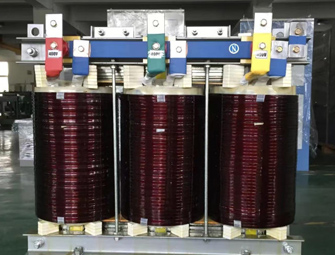


What Are Amorphous Transformer Cores
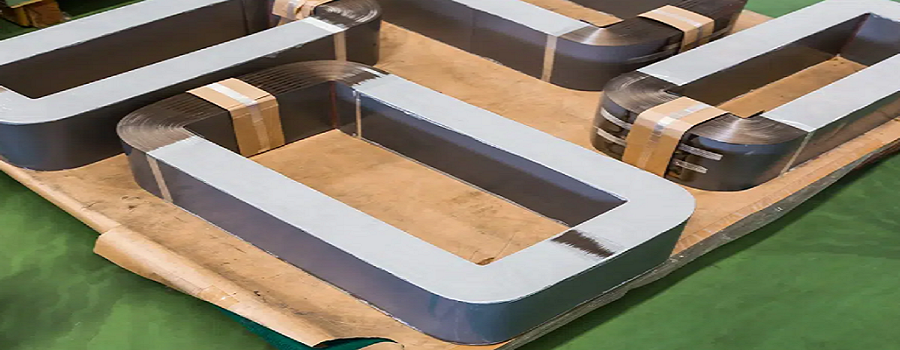
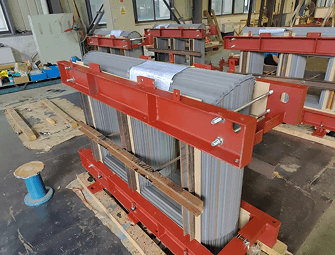
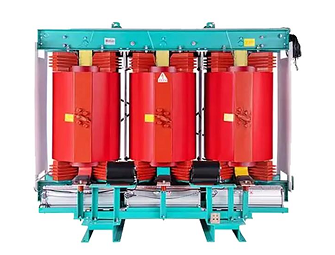
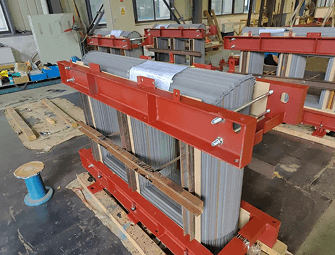
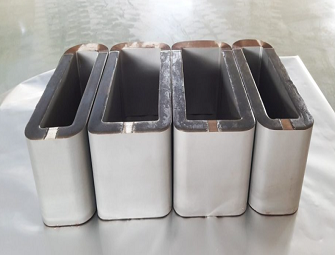
Amorphous alloy cores are made of amorphous metal, by melting iron silicon boron alloy at high temperatures and then cooling it extremely fast, preventing the formation of a crystalline structure, and the atoms are arranged in a disordered amorphous arrangement.
Three core characteristics:
High permeability: Faster magnetic field response and lower excitation demand.
Ultra-low core loss: Hysteresis, eddy current, and excitation current losses are much lower than traditional materials.
High mechanical strength: Strong durability, adaptable to complex working conditions, longer life.
Essential difference with traditional iron core: disordered arrangement of atoms, no crystal boundaries, no lattice defects, easier magnetic domain flip.
What Are Traditional Transformer Cores?
Conventional iron core, i.e. silicon steel sheet core, consists of 0.35-0.5mm thick cold rolled grain oriented silicon steel sheets stacked together, with an insulating layer between the sheets to reduce eddy currents. Common structures include ring, E-type, U-type.
Advantages of conventional cores
Low cost, easy to purchase
Wide frequency range
Good corrosion resistance
Certain magnetic permeability
Shortcomings of traditional iron core
High no-load loss
Large size and weight
Low energy efficiency limit
Significant heat generation, high cooling cost
Under the dual-carbon and energy-saving policies, traditional iron cores are no longer able to meet the demands of high-efficiency power grids.
Why Amorphous Cores Are More Efficient
High efficiency of amorphous alloy cores is rooted in the material structure + optimisation of magnetic properties, which reduces the three main losses at source.
Amorphous atomic structure
Traditional crystalline silicon steel has grain boundaries and lattice resistance, making it difficult to flip magnetic domains and resulting in high hysteresis loss.
Amorphous alloys have no grain boundaries, very low coercivity, and smooth movement of magnetic domains, reducing hysteresis loss by 70%-80%.
High Resistivity + Ultra-thin Strips
Amorphous alloys have about 3 times the resistivity of silicon steel.
Strip thickness is only about 0.025mm, much thinner than silicon steel sheet.
Combination of the two makes eddy currents significantly suppressed, resulting in less heat generation and lower losses.
Low excitation current
Amorphous alloy excitation current is smaller, the transformer still maintains high efficiency in light load and standby state, and the comprehensive energy efficiency can reach 99.5%, which is much higher than 96%-97% of traditional iron core.
Applications Where Amorphous Cores
Distribution Transformer
Grid voltage reduction core equipment, loss reduction directly reduce line waste, enhance power supply stability.
Electric Vehicle Fast Charging Station
Reduce energy loss and heat generation, avoid high temperature affecting battery life, and improve charging efficiency.
Photovoltaic New Energy System
Enhance the grid-connected efficiency of photovoltaic panels and reduce the waste of inverter and booster links.
Data Centre
Stabilise power supply and reduce PUE to meet the low energy consumption requirements of high-density computing power.
High-frequency electronic equipment
Better frequency response, low signal loss, suitable for broadcasting, communication, high-frequency power supply and so on.
Future Trends in Core Materials
Material upgrading: New iron-based / cobalt-based amorphous alloy formula optimisation, lower loss and greater stability.
Manufacturing process: Extreme cooling, moulding and cutting technology upgraded, cost continues to drop.
Scenario expansion: Into solid-state transformers, high-frequency converters, smart grids, energy storage systems and other next-generation power equipment.
Policy Driven : Global energy efficiency standards improve, amorphous alloy transformers become the first choice for new construction and transformation.
Amorphous alloy core is more efficient than traditional iron core, the core is disordered amorphous structure from the root to reduce hysteresis, eddy current, excitation of the three major losses. It not only realises significant energy saving, volume weight reduction and life extension, but also fits the development direction of low-carbon, high-efficiency and intelligent modern power grid.
In today’s accelerated energy transition, amorphous alloy core is no longer an optional technology, but a standard solution for high-efficiency transformers, which is the key support for energy saving and carbon reduction in the power system.